Tracing Response Protocols to Fraud Mitigation Across Tiered Fee Structures in Multi-Platform Retail Networks
Written by Avery Schmitt · Aug 25, 2026
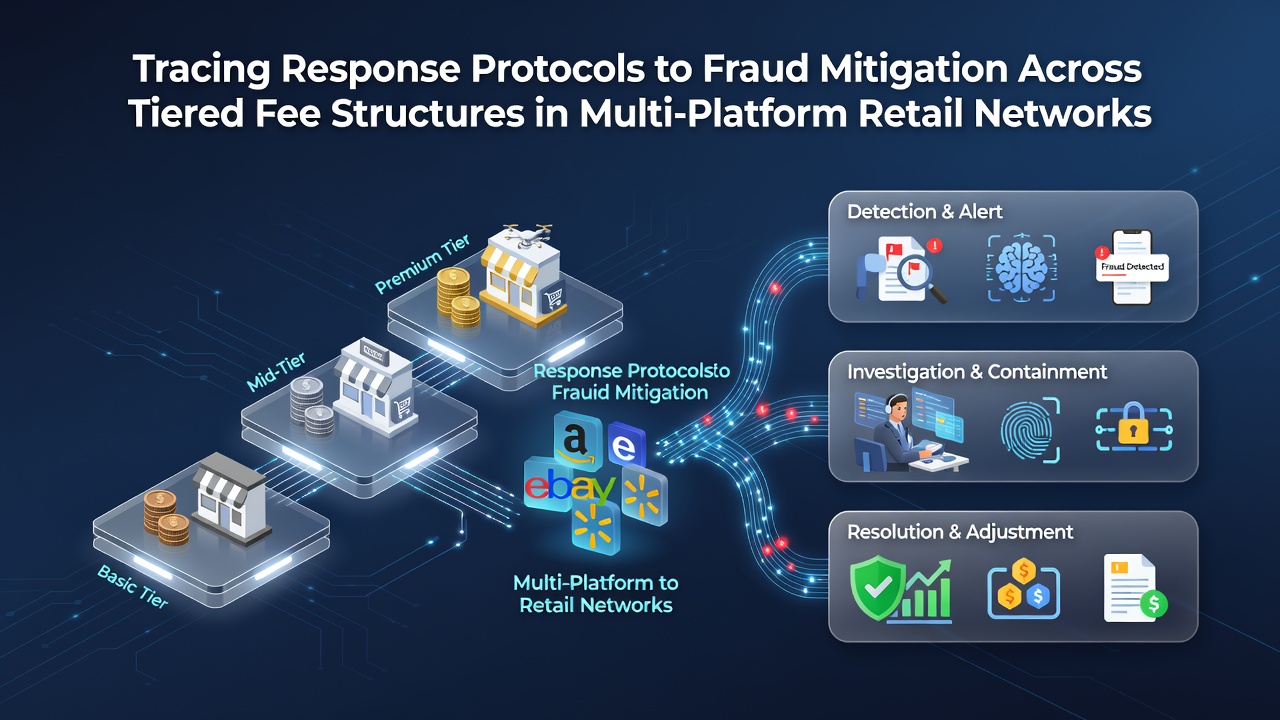
Tracing Response Protocols to Fraud Mitigation Across Tiered Fee Structures in Multi-Platform Retail Networks
Multi-platform retail networks operate across physical stores, e-commerce sites, and mobile applications, each with distinct fee structures that range from flat rates to volume-based tiers and interchange-plus models, and these variations directly shape how fraud response protocols get activated and scaled. Data from payment processors indicate that tiered pricing often correlates with differing levels of real-time monitoring resources, where lower-fee tiers receive basic alert systems while higher tiers incorporate advanced behavioral analytics and automated blocking mechanisms.
Fee Tiers and Their Influence on Protocol Activation
Retail operators who select entry-level tiered fees typically encounter streamlined response protocols that focus on post-transaction reviews and manual escalation paths, whereas premium tiers integrate machine learning models that flag anomalies within seconds of authorization requests. According to the Federal Trade Commission consumer fraud reports, networks using multi-tier pricing saw a measurable uptick in coordinated response times when protocols aligned payment velocity checks with specific fee brackets during the first half of 2026. Observers note that this alignment allows merchants to allocate fraud investigation staff more efficiently across channels without overextending budgets tied to lower-margin fee arrangements.
Response protocols in these environments follow a layered approach: initial detection relies on rule-based filters calibrated to each fee tier, followed by secondary verification that escalates based on transaction size and historical patterns, and final mitigation steps that may include temporary holds or customer notifications. In August 2026, updates to common gateway configurations began incorporating tier-specific thresholds for velocity monitoring, enabling faster isolation of suspicious activity in high-volume platforms while maintaining cost controls on smaller retail setups.
Multi-Platform Coordination Challenges
Coordinating protocols across platforms presents distinct hurdles because each channel processes data through separate APIs and reporting dashboards, yet fraud patterns frequently span all of them simultaneously. Researchers at academic institutions have documented cases where a single fraud ring exploited inconsistencies between mobile and in-store fee tiers, prompting operators to adopt unified response frameworks that reference a central risk score regardless of the originating platform. Those frameworks draw on shared databases that update in near real time, allowing a flagged event on one platform to trigger immediate reviews on others even when fee structures differ.

Industry reports from the European Central Bank highlight how tiered pricing influences the depth of automated responses, with data showing that networks offering three or more fee levels achieved higher containment rates for account takeover attempts when protocols included cross-platform token validation. The reality is that lower tiers sometimes limit access to premium fraud tools, which forces operators to rely more heavily on manual intervention and third-party services during peak periods. People who manage these networks often discover that mapping response timelines to each tier reduces duplicate alerts and improves overall resource allocation.
Integration of Monitoring Tools with Pricing Models
Modern monitoring tools connect directly to pricing models through configurable parameters that adjust sensitivity based on the selected fee tier, so a merchant on a mid-range plan might receive daily summary reports supplemented by instant alerts for high-risk events, while enterprise tiers gain continuous scoring and predictive modeling. Trade association studies reveal that this customization supports compliance with standards such as PCI DSS without requiring uniform investment across all retail channels. What's significant is the way these tools log protocol outcomes against fee expenditures, giving operators clear metrics on return from each mitigation layer.
Case examples from Canadian retail groups illustrate successful tracing of response protocols where a shift from basic to enhanced tiers coincided with a documented drop in chargeback ratios across hybrid storefronts. The process involves mapping each protocol step to specific cost centers, then evaluating performance through key indicators such as time-to-resolution and false positive rates. External data from the Australian Securities and Investments Commission further indicates that regulatory expectations around fraud reporting have begun to reference tiered pricing disclosures, encouraging clearer documentation of how response capabilities scale with merchant fees.
Conclusion
Tracing response protocols through tiered fee structures in multi-platform retail networks reveals consistent patterns where pricing choices shape detection speed, escalation paths, and cross-channel coordination. Evidence from regulatory bodies and industry analyses demonstrates that operators who align their mitigation tools with specific tiers achieve more targeted resource use and improved containment of fraudulent activity. Continued evolution of these systems, particularly around real-time data sharing, points toward increasingly granular protocol designs that match the diversity of modern retail fee arrangements.