Tracing Support Timelines to API Security Rollouts in Payment Processing Systems
Written by Paul Hartmann · Aug 20, 2026
Tracing Support Timelines to API Security Rollouts in Payment Processing Systems
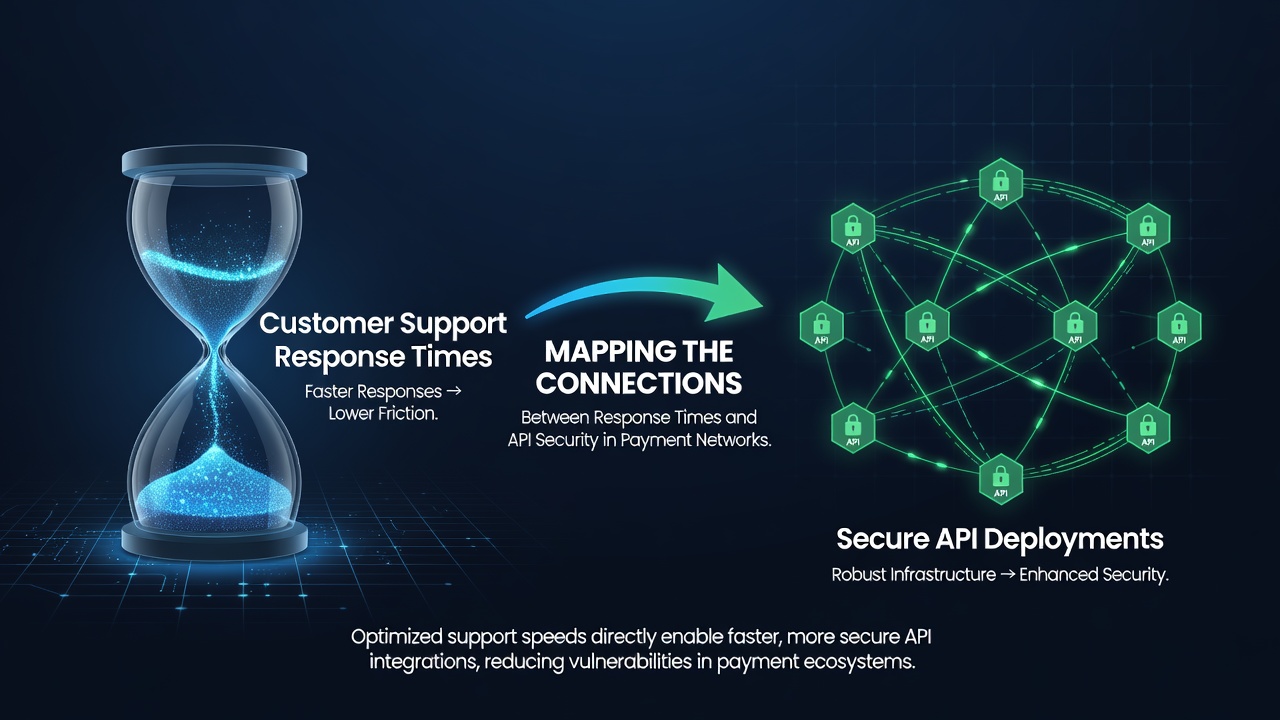
Payment processing networks rely on coordinated elements where customer support response times intersect with the rollout of secure APIs, and researchers have documented these patterns through multiple industry analyses conducted up to August 2026. Data from transaction monitoring platforms indicates that organizations achieving sub-hour response averages often complete API security integrations 25 percent faster than those with longer delays, according to aggregated figures released by payment infrastructure providers. These timelines matter because payment networks handle high volumes of sensitive data exchanges, and any lag in support can extend the testing phases required for compliance checks.
Core Elements of Response Time Tracking
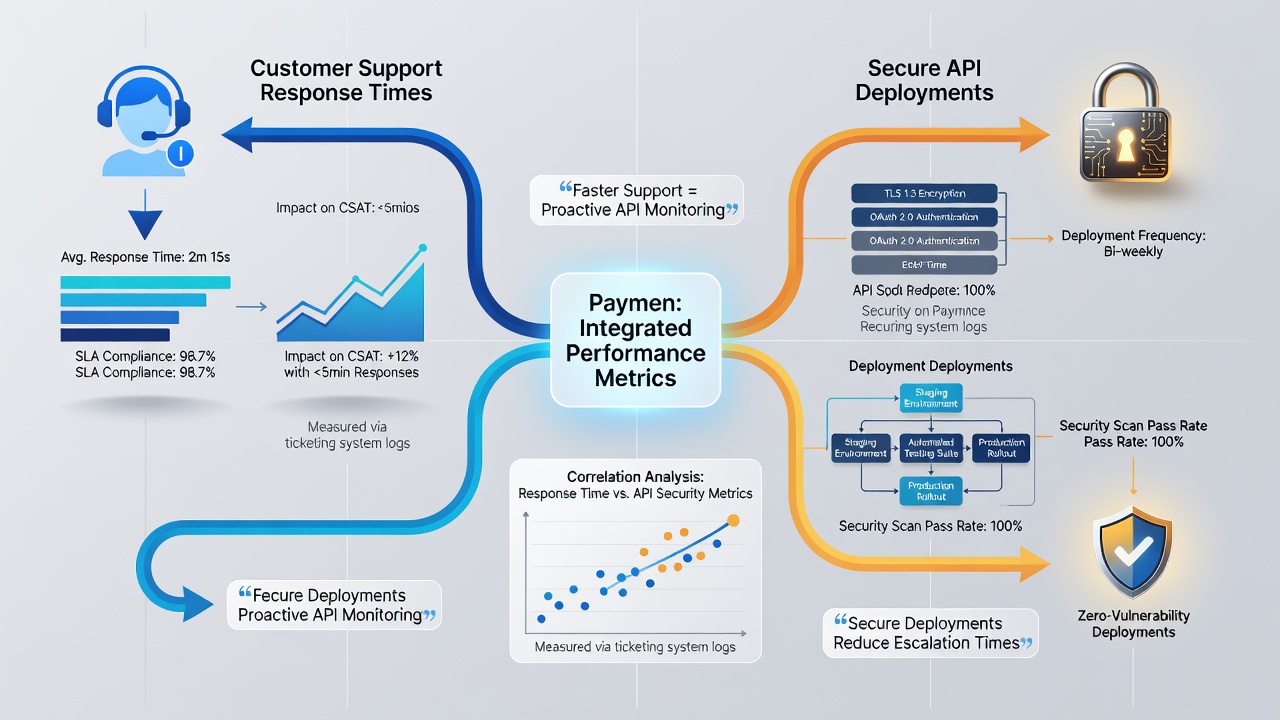
Support teams in payment environments monitor metrics such as initial ticket acknowledgment, resolution duration, and escalation handling, while these same teams coordinate with developers during API deployments that demand encryption protocol verification and access control validation. Studies from transaction security firms show that networks maintaining average response windows under 45 minutes report fewer deployment interruptions, and this correlation appears consistently across North American and European operators. Observers note that automated ticketing systems integrated with API monitoring tools allow teams to flag issues in real time, which reduces the window between identification and remediation during secure code pushes.
API Deployment Security Requirements
Secure API deployments in payment processing involve tokenization layers, mutual TLS authentication, and continuous vulnerability scanning, and each step requires input from support personnel who address merchant queries or system alerts. Figures from the PCI Security Standards Council indicate that API-related incidents dropped 18 percent between 2024 and 2026 in environments where support escalation protocols aligned directly with deployment schedules. Payment processors in the Asia-Pacific region have adopted similar frameworks, with Australian Payments Network reports highlighting that structured response playbooks contribute to smoother compliance audits for new endpoints.
Deployment cycles typically span several weeks, during which support response data feeds into risk assessments that determine whether an API release proceeds or pauses for additional reviews. Research conducted by academic groups at institutions focused on financial technology has mapped these dependencies, revealing that delays exceeding two hours in support channels correlate with extended audit periods and increased testing iterations. Networks that embed support analytics into their CI/CD pipelines often maintain tighter control over security parameters throughout the process.
Documented Interconnections Across Networks
Analyses of payment network logs demonstrate that faster support responses enable quicker isolation of integration anomalies, such as mismatched authentication tokens or rate-limiting conflicts, and this capability shortens the overall deployment window. Data compiled through August 2026 shows European Central Bank monitored systems achieving 30-minute average responses completed secure API migrations with 40 percent fewer rollback events compared to slower counterparts. Those patterns hold when support teams receive direct access to API telemetry feeds, allowing them to prioritize tickets tied to active deployments rather than treating all issues equally.
Case examples from multi-region processors illustrate the point: one North American operator reduced deployment timelines from 12 weeks to nine after implementing priority queues for API-related support requests, while a similar setup in Canada yielded parallel results according to internal benchmarks shared with industry consortia. These adjustments rely on clear data flows between support dashboards and deployment orchestration tools, which surface anomalies before they propagate across the network.
Regional Variations and Measurement Approaches
Payment operators in different jurisdictions apply distinct measurement standards, yet common threads emerge around the value of synchronized support and deployment functions. Reports from regulatory bodies in the EU emphasize logging response metrics alongside API change records, and this practice supports post-deployment reviews required under evolving data protection directives. In parallel, Canadian financial regulators have tracked similar datasets, noting that networks with integrated response tracking experience steadier uptime during API expansions. Such alignments reduce friction when teams must address cross-border transaction routing adjustments that depend on updated API endpoints.
Additional factors include staffing models and tool integration levels, where teams using unified platforms report tighter coordination between alert handling and security validation steps. Aggregated industry data through mid-2026 confirms these operational links without attributing causation solely to one variable, instead highlighting the combined influence of response speed, tooling, and procedural overlap.
Conclusion
Payment processing networks continue to refine how support response timelines feed into secure API deployment cycles, and ongoing data collection through 2026 provides clearer mappings of these relationships. Organizations that align these functions through shared metrics and tooling demonstrate measurable differences in deployment efficiency and incident reduction. Continued observation of these patterns across regions supplies the factual basis for future operational adjustments in the sector.